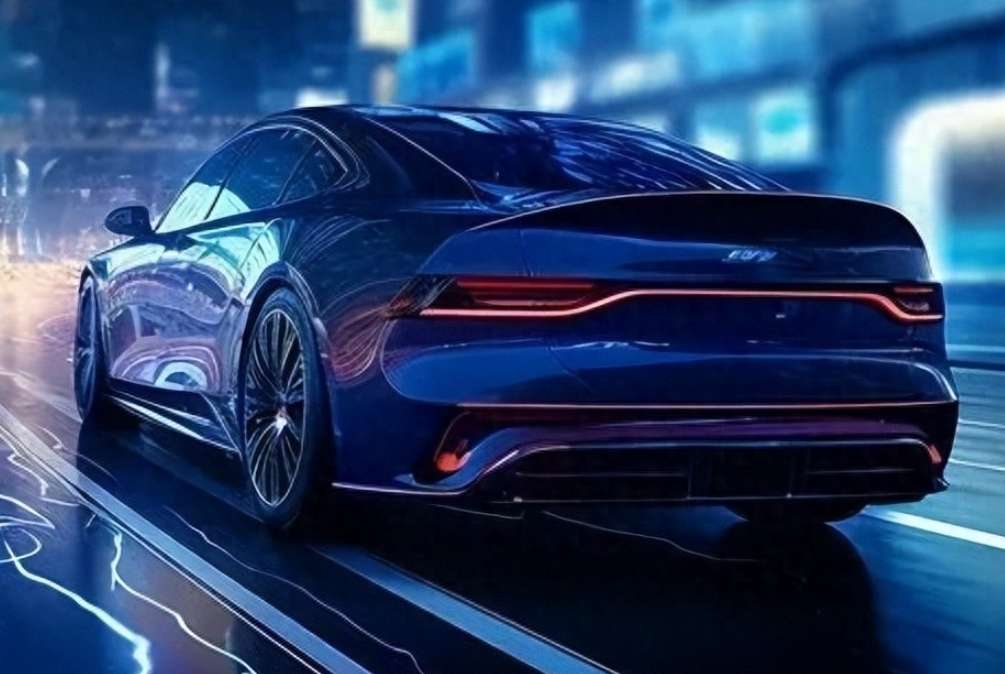
If you own Tesla stock or are thinking about buying it, watching the price chart lately has been a gut punch. It's not just a dip; it feels like a fundamental reassessment. I've been tracking Tesla's financials and the EV sector for years, and this downturn has a different flavor. It's not 2022's interest rate panic. This time, the questions are more profound: Has Tesla lost its moat? Is the growth story over? Let's cut through the noise. Tesla stock is falling because a perfect storm of brutal competition, questions about demand sustainability, leadership distractions, and financial margin pressure is hitting all at once. The market is pricing in a future where Tesla is a major, but not dominant, player in a crowded, price-sensitive EV market.
What's Driving TSLA Down? A Quick Guide
Intensifying EV Competition: The China Factor
For years, Tesla's competition was a joke. Legacy automakers were slow, their EVs were compromised, and Tesla's tech lead seemed insurmountable. That era is over. The most significant threat isn't coming from Detroit or Stuttgart; it's coming from China.
Companies like BYD have executed with a speed and cost efficiency that has stunned the industry. They've vertically integrated supply chains in a way Tesla talked about but hasn't fully achieved at the same scale. The result? They can produce compelling, tech-laden EVs at prices Tesla simply cannot match without destroying its profitability. I've reviewed the spec sheets and pricing. A BYD Seal or a Nio ET5 isn't a "cheap" car in a bad way; it's a legitimate, well-made alternative to a Model 3.
This isn't just a China story. In the US, the IRA (Inflation Reduction Act) was supposed to be a tailwind, but it also lit a fire under every other automaker. Ford's Mustang Mach-E, Hyundai's Ioniq 5 (a critically acclaimed vehicle), and GM's upcoming Ultium platform EVs are no longer afterthoughts. They are credible. The market has shifted from "Why buy an EV?" to "Which EV should I buy?" Tesla's slice of a rapidly growing pie is getting smaller.
| Competitor | Key Model (vs. Tesla) | Primary Advantage | Market Impact |
|---|---|---|---|
| BYD (China) | Seal (vs. Model 3) | Radically lower cost structure, battery tech | Dominating China, expanding globally, forcing price wars |
| Hyundai/Kia (Global) | Ioniq 5 / EV6 (vs. Model Y) | Superior build quality, fast charging, design | Winning critical acclaim, taking significant market share in US/EU |
| Ford (USA) | Mustang Mach-E (vs. Model Y) | Strong brand loyalty, dealership network | Capturing traditional SUV buyers hesitant to go direct-to-consumer |
| Rivian (USA) | R1S (vs. Model X) | Adventure/utility focus, unique design | Winning the high-end SUV/ truck niche, seen as more "authentic" |
The subtle mistake many analysts make is comparing Tesla only on specs like 0-60 mph or range. The real battle is now about value, quality consistency, and brand perception. Tesla's minimalist interior, once futuristic, now feels sparse to some buyers compared to more luxurious or thoughtfully designed cabins from competitors.
Is Slowing Demand a Temporary Blip or a Structural Shift?
Tesla's demand problem is multifaceted. It's not that people don't want EVs. It's that the pool of early adopters—those willing to pay a premium for the newest tech and overlook build quality issues—is largely tapped out in key markets.
The next wave of buyers is more pragmatic. They care about cost, reliability, servicing convenience (having a local dealer matters), and whether the car feels like a good value. Tesla's aggressive price cuts in 2023 were a clear signal: demand at the previous price points was softening. While cuts boosted volumes, they trained customers to wait for the next discount and, crucially, cratered automotive gross margins.
Then there's the Cybertruck. From my perspective, this is a strategic misstep that's consuming immense resources. It's a niche vehicle with a polarizing design and complex manufacturing process (the stainless steel exoskeleton). It appeals to a loud, dedicated fanbase but likely repels the mainstream pickup truck buyer who values simplicity and proven capability. The resources poured into Cybertruck could have been used to accelerate a truly competitive, affordable compact car (the oft-rumored "Model 2"), which is what the market actually needs to drive the next leg of growth.
High interest rates haven't helped, making car loans more expensive. But that's a macro headwind everyone faces. Tesla's demand issue feels more specific—a maturation of its core product lineup at a time when compelling alternatives abound.
The Elon Musk Factor: Leadership and Focus
Elon Musk is Tesla's greatest asset and its largest single-point-of-failure risk. His vision built the company. But his attention is now catastrophically divided.
Running Tesla, SpaceX, Neuralink, The Boring Company, and now X (Twitter) is not a sign of genius productivity; it's a red flag for corporate governance. Investors in a public company rightly expect the CEO's primary focus to be on that company. When Musk is embroiled in political controversies on X or making pronouncements that alienate a portion of Tesla's potential customer base, it directly impacts the brand.
There's a more tangible fear too: shareholder dilution. Musk has repeatedly stated he wants more voting control over Tesla (25%) to feel secure in developing AI and robotics there. The market is terrified he will push for a new, massive compensation package to achieve this, diluting existing shareholders. Or worse, that if he doesn't get it, he might shift his best AI talent and focus to one of his private ventures, like xAI. This overhang creates immense uncertainty.
Financial Pressures: Margins and Earnings Reality
This is where the rubber meets the road. Tesla's financials have shifted. The story was always "we'll sacrifice margin for growth, and the margins will come later with scale." The scale is here, but the margins are going the wrong way.
Automotive Gross Margin is the key metric to watch. It peaked above 30% and has been in a steady decline, now sitting in the high teens. Why?
- Price Cuts: To stimulate demand, they've had to cut prices globally.
- Higher Costs: Inflation on materials, labor, and logistics.
- Product Mix: Older models (S and X) are low volume. The growth driver, Model Y/3, is in the most competitive price segment.
- Cybertruck Ramp: It's a money-loser in the early production stage, weighing on overall profitability.
This margin compression directly hits earnings per share (EPS). If revenue growth slows (which it has) and margins contract, EPS can flatline or fall. That's exactly what we've seen. The market values growth stocks on future earnings potential. When that potential is being revised downward quarter after quarter, the stock gets hammered.
The Full Self-Driving (FSD) and AI narrative is supposed to be the savior—a high-margin software business. But regulatory approval for true autonomous robotaxis remains a distant, uncertain prospect. Investors are growing impatient funding this moonshot while the core car business faces headwinds.
What Should Investors Do Now?
This isn't financial advice, but a framework for thinking based on a decade of watching tech and auto cycles. You need to decide what story you believe in.
If You're a Long-Term Believer (The "Tesla is more than a car company" view):
The current price might represent a buying opportunity for those with a 5-10 year horizon. You're betting that:
1. Tesla solves its manufacturing costs and launches a compelling, profitable mass-market vehicle.
2. FSD software achieves a breakthrough, unlocking that legendary software margin.
3. Energy storage (Megapack) becomes a massive, second pillar of growth.
4. Musk refocuses or the board successfully manages the succession risk.
This is a high-risk, high-potential-reward path. Your entry point matters immensely. Dollar-cost averaging in over time might be a wiser strategy than going all-in now.
If You're a Realist or Concerned (The "Tesla is a leading, but challenged, car company" view):
Consider reducing your position size or holding but not adding. Wait for concrete signs of a turnaround:
- Automotive gross margins stabilizing or expanding for two consecutive quarters.
- Clear, believable guidance on the launch timeline and cost targets for the next-gen affordable car.
- A resolution to the Musk compensation/control overhang that doesn't massively dilute shareholders.
- Evidence that Cybertruck is reaching profitability and not just sucking up resources.
Until then, there might be better opportunities elsewhere in the market with clearer near-term paths.
Personally, I think the market is correctly repricing Tesla from a hyper-growth, almost-no-competition tech stock to a lower-multiple, high-growth but competitive automotive/tech hybrid. The days of 100x+ P/E ratios are likely over.
Tesla Stock FAQs: Your Burning Questions Answered
This analysis is based on publicly available financial data from Tesla's Investor Relations page and the U.S. Securities and Exchange Commission (SEC), industry sales reports from sources like the China Passenger Car Association (CPCA), and long-term observation of automotive and technology market trends. The opinions expressed are those of the author, a long-time financial analyst covering the technology and transportation sectors.